
Top 10 Mistakes to Avoid When Hiring International Packers and Movers
The most common international relocation mistakes are starting too late, choosing movers on price...

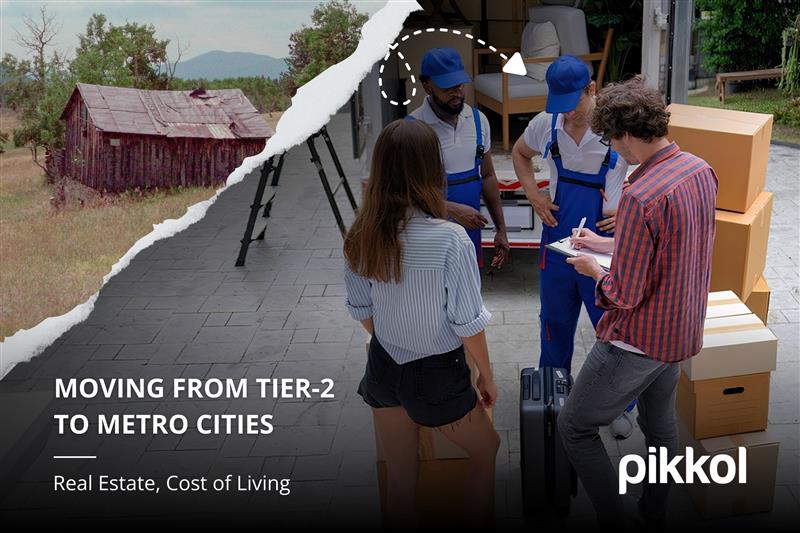
There's a moment that every migrant from a Tier-2 city probably remembers - that first time you look at rent prices in a metro and double check whether that tiny decimal point is in the right place.
Moving from a smaller city - like Indore, Coimbatore or Nagpur - to a bustling metropolis like Mumbai, Bangalore or Delhi NCR is a kind of rite of passage for millions of Indians who are chasing career growth, looking for higher education, or just want to experience the energy of a big city. It's an exhilarating leap - but it comes with a brutal slap in the face in the form of a cold hard reality check.
Moving isn't just a change of address - it's a complete overhaul of your financial situation and daily routine. Here's a guide to help you navigate the 3 biggest culture shocks you're likely to face in making a Tier-2 to Metro transition - Real Estate, the cost of living & the lifestyle shift.
The Real Estate Reality: Space is Suddenly a Luxury
When you're coming from a Tier-2 city, "space" is often assumed to be a given - you might be used to a 2 or 3 BHK apartment that could almost double up as a basketball court. But in a big city, real estate is a whole different ball game and space comes at its own price - square footage.
The Shock of Space Compression
The first thing that hits you is just how cramped things are. Your budget in a Tier-2 city might have been able to get you a nice new apartment with plenty of room to spare. But in a big city, you'll find that the same budget can barely get you a compact 1 BHK - or maybe even a shared PG - that's 30-40% smaller than you were used to.
Pro Tip: Forget chasing the Tier-2 dream of having a big living room. In a big city, it's more about efficiency. How close are you to work? Is public transport an easy hop away? Are the shops and groceries nearby? All these little things add way more value to your life than having an extra balcony.
The Real Cost of Living: When the Bills Pile Up
You figure rent's gonna be more, no question. But moving to a big city is gonna leave a few holes in your wallet that you never saw coming back home.
The “Convenience” Catch
In a smaller town, if you're hungry you just head home or your mom whips something up. In a metro, though, you're working late and stuck in traffic - the last thing you feel like doing is cooking. So you're ordering in or grabbing food at the café down the street 3 or 4 times a week. And that “convenience” from food delivery apps ends up costing you an arm and a leg every single month.
How Commuting Eats Away at You
Back home, you probably just jumped on your bike and went wherever you needed to go, blowing about ₹500-1000 on fuel each month. But in a metro:
Just getting around a big city is a whole lot more expensive than you ever thought. Before long, quite a few migrants figure out the smart thing to do is just move closer to work (paying a bit more rent) to cut down on how much they waste on transport - and that's a trick-of-the-trade that takes a while to get in the swing of.
Reality Check
Moving from a Tier-2 city to a metro is an exchange. You trade in personal space for professional opportunities. You trade out familial comfort for a new circle of acquaintances. And you trade in quiet nights for a stimulating energy that just won't let up.
The first six months will be the toughest. Your rent will probably kill you and the crowds will exhaust you. But, if you manage to get your head around the whole housing and living costs situation and figure out how to navigate the city without breaking the bank, then a metro can become the perfect platform to launch yourself into a whole new world of possibilities.
Planning Your Move? - Let Us Take the Burden Off Your Shoulders.
Relocating to a metro can be a handful - let's be honest, your move shouldn't be yet another thing to get stressed out about.
Pikkol takes care of the whole relocation thing for you with our domestic relocation services - that's packing, transportation, storing your stuff & all the behind-the-scenes work, handled by pros. Whether you're moving into a tiny studio or a spacious family apartment, we'll make the transition as easy as possible.
From smaller towns to India's biggest, bustling metros, we'll move your world safely & give it the care it needs.
The most common international relocation mistakes are starting too late, choosing movers on price...

A practical Indian guide to understanding life, culture, weather, and smart adjustment while moving...

A practical Indian guide to building a better future while moving to Dubai, UAE from India with conf...